




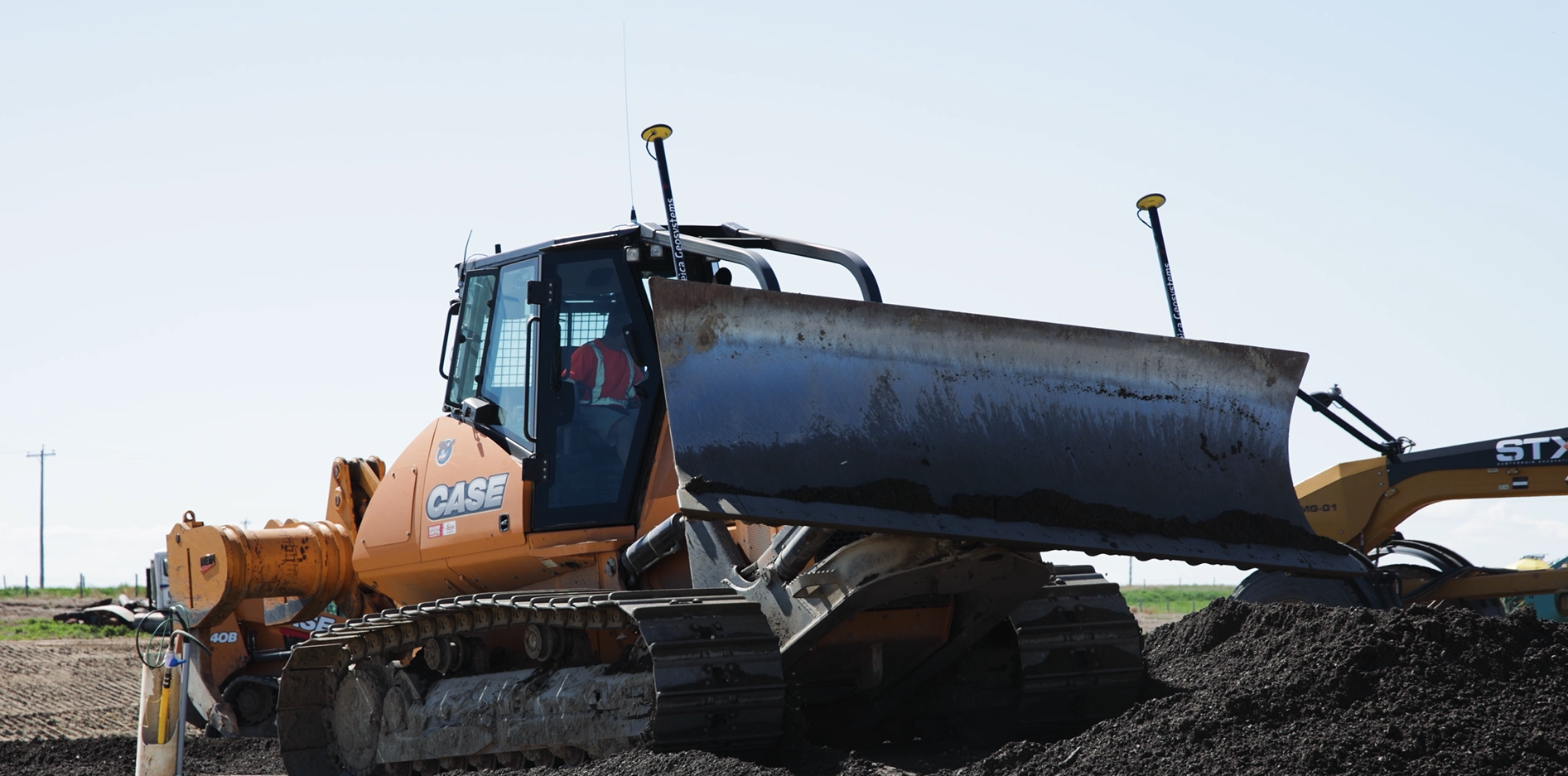
Machine control technology has advanced significantly since the introduction of the first guidance systems for earthmoving equipment in the late 1990s. While the ability to check grade without stringlines or stakes, and without leaving the cab, remains the core value of machine control, today’s systems offer greater precision, real-time data transfer, remote support and more intuitive operation.
The earliest systems used GPS receivers mounted on equipment to receive signals from satellites and determine the machine’s location and elevation. Many contractors still refer to machine control simply as “GPS.” Today, however, with more satellites available through systems like GNSS and GLONASS, receivers can connect to multiple signals more easily, improving triangulation and reducing errors.
“In the past, a lot of contractors didn’t understand the technology and didn’t appreciate what they could do with it,” says Ryan Baumbach, technical services specialist in machine control at Spatial Technologies, a Leica Geosystems dealer based in Western Canada. “Now it’s a necessity. Contractors are seeing the benefits. It makes their lives so much easier.”
How Today’s Technology Compares with Early Models
“The technology has come a long way,” says Cletus Young, manager of machine control and construction positioning at Spatial Technologies.
Leica Geosystems, part of Hexagon, has been at the forefront of GPS technology from the beginning, first integrating GPS into survey equipment before expanding into 2D and 3D machine control. “The newer software from Leica is far more intuitive than what I learned on eight years ago,” Baumbach says. “Someone with no experience can practically pick it up and figure it out themselves.” (Although Baumbach, a firm believer in training on standard operating procedures, cautions against the DIY approach.)
The Leica Geosystems technology also excels in mixed-fleet environments. The software is built to work seamlessly with the contractor’s workflow. “It’s easy to integrate Leica into an existing fleet, regardless of the other brands used,” Young says.
Where Leica Machine Control Stands Out
Intuitive operation was a key selling point for Sub-Terrain Excavating (STX), based in Iron Springs, Alberta, Canada, a Spatial Technologies customer whose business has grown significantly since adopting the technology.
“Leica is very easy to use,” says Teunis Tichelaar, project manager and surveyor for STX. “Our operators haven’t had any issues running it. You give them a 30-second run-through on how to use it, the surveyor uploads the files, and then you’re good to go.”
Another major advantage is HxGN SmartNet, whose coverage has improved to the point that contractors in many areas no longer need to set up a base station. SmartNet is the world’s largest GNSS correction network, providing reliable, precise data from more than 5,300 reference stations worldwide.
“That’s come a long way in the last few years,” Young says. “I don’t even think it was an option in our area when I started 12 years ago.”
Connected machines also allow contractors to use remote support. The Leica ConX system — a cloud-based collaboration platform — helps minimize downtime by enabling real-time communication between the office and the machine for troubleshooting or training, thereby eliminating travel time and associated costs.
Baumbach is skilled at solving issues over the phone, but he’d like to see more contractors use ConX for even faster resolution. “It might make the difference between solving an issue in five minutes versus two or three hours,” he says.
Service And Support Drive Buying Decisions
Besides the ease of training and using the technology, many contractors base their machine control decisions on service and support.
“Contractors will do their research on which brand or system they want, but for most people, it comes down to the service and the people you’re buying from,” Baumbach says. “It’s about trusting the team, whether it’s sales or support.”
“Our partnership with Spatial is fantastic,” says STX’s Tichelaar. “Ryan can diagnose anything. They’ve got the system under control, no matter where you are. They can tell you the next step off the top of their head.”
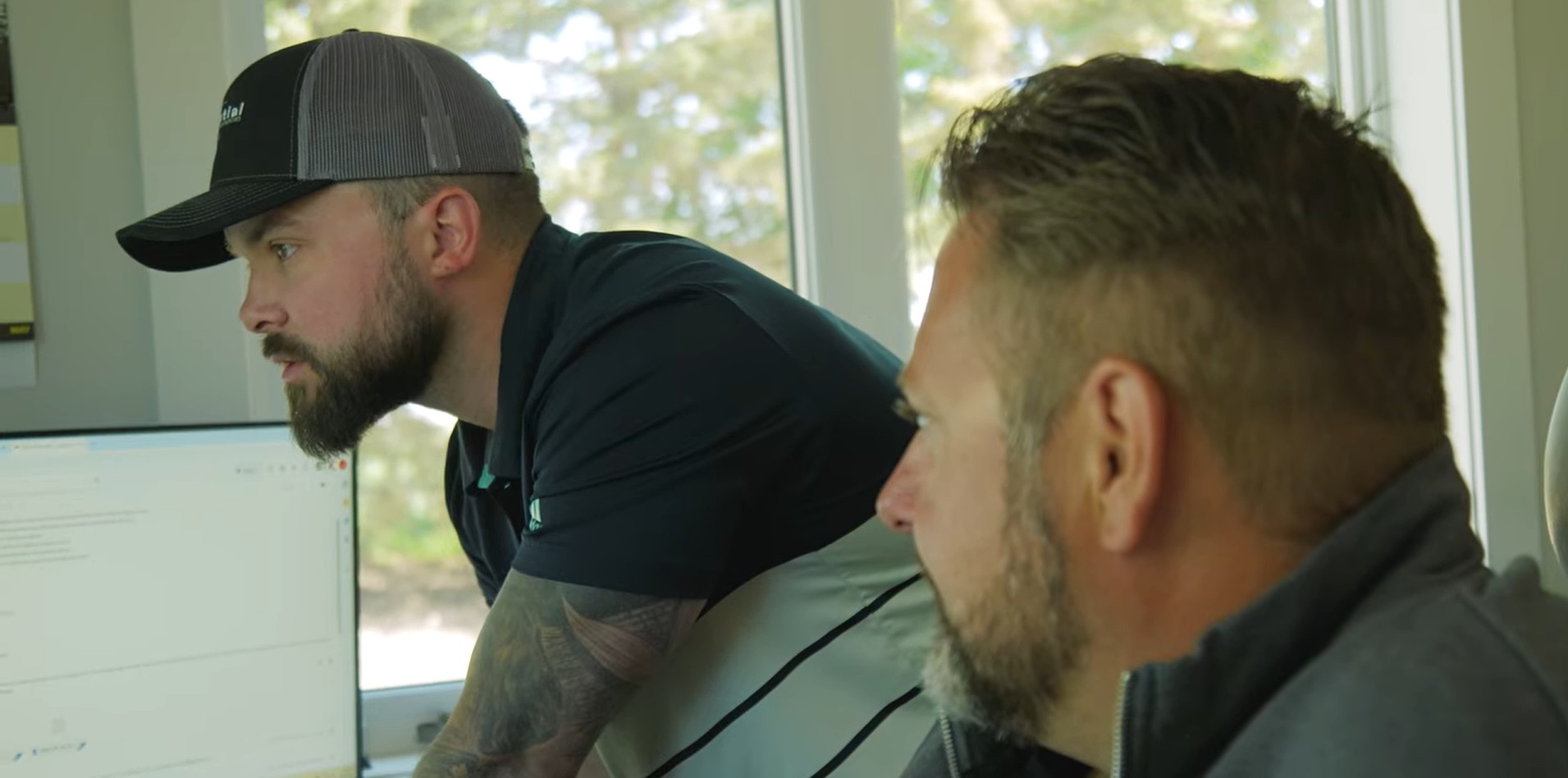
Relationships and experience matter. Baumbach routinely provides customers with his direct cell phone number, as well as an 800 number to call if they have any issues or questions. He understands the importance of responding quickly. Before joining Spatial Technologies three years ago, he worked in the pipeline construction industry. Young began as a surveyor, then transitioned into sales of other machine control technology brands before joining Spatial Technologies 12 years ago — valuable experience that helps him guide contractors in their purchasing decisions.
“One thing that sets Spatial Technologies apart is the knowledge of the people answering questions,” Young says.
Initial training from Spatial Technologies is always free, and about 90% of support calls are resolved over the phone at no charge, Baumbach says.
“That’s a big factor because some technology dealers charge hourly for support, even if you just call with a question,” he says.
Spatial Technologies has found a niche with smaller up-and-coming contractors that may not feel their technology needs are supported by the larger heavy equipment dealers. “Whether a contractor is investing in one system or 10, we make sure they know they’re important,” says Baumbach.
Leica Geosystems Technology + Customer-Focused Dealers Make the Difference
Easy-to-use technology combined with experienced, customer-focused dealers has long been central to Leica Geosystems’ success in the machine control market — and the impact on contractors is clear.
“One of our customers hugged me the other day because of how well the Leica machine control was working,” Baumbach says.
That’s as good a testimonial as you’ll find.